
Operating System
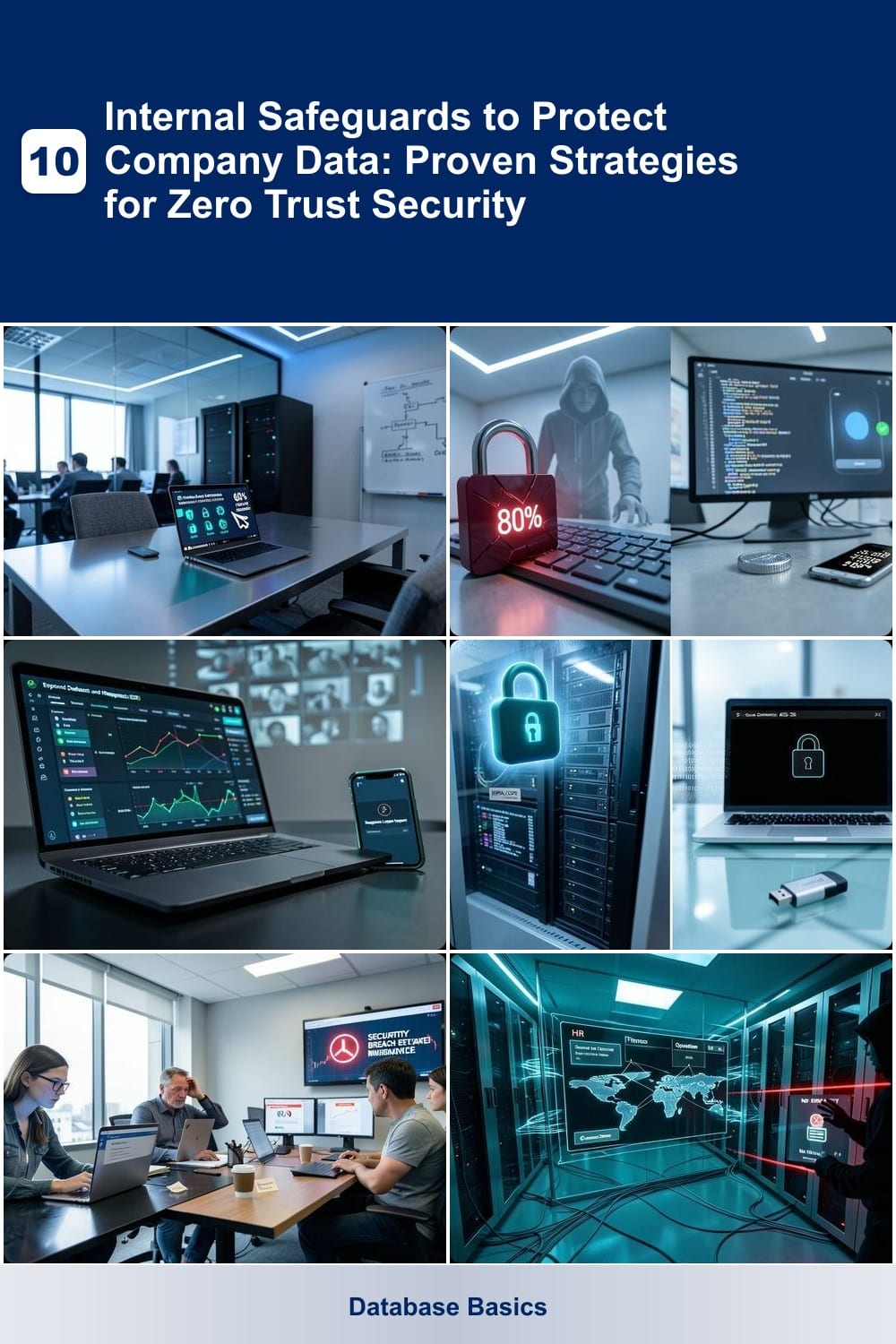
Cyber threats evolve daily, but internal safeguards remain your first line of defense. These 10 zero-trust strategies empower businesses to secure sensitive data without relying solely on external firewalls, ensuring resilience against both external attacks and insider risks.
Role-Based Access Control Implementation

Tired of hearing about massive breaches caused by employees accessing data they shouldn’t? Role-Based Access Control (RBAC) is your first line of defense—it ensures every user gets only the permissions they need for their job, and nothing more. This isn’t just theory: studies show 60% of data leaks happen due to over-permissioned accounts, often from well-meaning employees who accidentally expose sensitive files.
Modern RBAC systems like Microsoft Azure AD or Okta let you define roles (e.g., "HR Manager," "Finance Analyst") with precise access rules—like restricting a sales rep from viewing customer payment details. Advanced platforms even support attribute-based access control (ABAC), where permissions adapt dynamically (e.g., granting temporary access to a contractor for a specific project). Compliance teams love this because it automates audits and reduces manual errors, while IT admins gain granular control without constant rule updates.
This is a must-have for regulated industries (healthcare, finance) but also critical for any business with remote teams or shared resources. Start by auditing your current permissions—you’ll likely find accounts with admin rights assigned to employees who only need read access. 💻
Multi-Factor Authentication for All Systems

Credential stuffing attacks account for 80% of all hacking-related breaches—and yet, many companies still rely solely on passwords. Multi-Factor Authentication (MFA) shuts down these attacks by requiring a second verification step, like a biometric scan, hardware token, or time-based code, even if passwords are compromised.
Modern MFA solutions like Duo Security or Microsoft Authenticator integrate seamlessly with Active Directory, cloud apps, and VPNs, supporting push notifications, SMS, or hardware keys (like YubiKey) for frictionless security. The best platforms also offer adaptive access controls, automatically escalating verification for high-risk logins—such as a sudden login from a new country or device. This isn’t just about checking boxes; it’s about blocking the most common attack vector with minimal disruption to workflows.
Remote executives and global teams benefit most from MFA, as it protects against phishing, man-in-the-middle attacks, and credential theft—without requiring complex IT overhead. Start with critical systems first (email, VPN, financial tools) to maximize impact. 💻
Endpoint Detection and Response (EDR) Deployment

When laptops and mobile devices are your team’s primary tools, traditional antivirus just isn’t enough. Endpoint Detection and Response (EDR) bridges that gap by monitoring endpoints in real-time for suspicious behavior—like unauthorized data transfers or unusual login patterns—before they become breaches.
Modern EDR solutions like CrowdStrike or Microsoft Defender for Endpoint use AI-driven behavioral analysis to detect threats with zero-day exploit protection, while providing detailed forensic reports for post-incident investigations. The best platforms integrate seamlessly with existing security tools, offering automated containment of compromised devices without manual intervention.
This is especially critical for hybrid teams where devices move between secure networks and public Wi-Fi. By deploying EDR, you’re not just reacting to threats—you’re stopping them before they escalate. 💪
Data Encryption for Sensitive Files

Regulated industries like healthcare and finance face harsh penalties for data leaks—end-to-end encryption ensures sensitive files stay locked down, even if devices or networks are compromised. Unlike basic file encryption, this method secures data at rest (stored files) and in transit (emails, cloud transfers), meeting compliance standards like HIPAA and GDPR without sacrificing usability.
Solutions like VeraCrypt (open-source) or Microsoft Azure Information Protection (cloud-integrated) offer military-grade AES-256 encryption, turning files into unreadable ciphertext unless decrypted with the correct key. For cloud storage, Tresorit adds an extra layer by encrypting files before they even leave your device, ensuring third-party providers can’t access the raw data.
This safeguard is non-negotiable for businesses handling patient records, financial transactions, or legal documents—where a single breach could trigger lawsuits or reputational damage. ⚡
Regular Security Awareness Training Programs

Your employees might be your biggest security risk—and that’s not a criticism, just reality. 90% of breaches start with human error, whether it’s clicking a malicious link or falling for a clever social engineering trick. The fix? Interactive security awareness training that turns passive learning into hands-on practice.
Platforms like KnowBe4 or PhishMe send simulated phishing emails directly to inboxes, testing real-world reactions while tracking improvement over time. These aren’t boring slideshows—they’re gamified scenarios where employees learn by doing, with instant feedback on mistakes. For example, a poorly designed training module might teach users to spot "urgent" emails from Nigerian princes, but a realistic simulation of a vendor impersonation attack builds muscle memory for high-stakes situations.
This isn’t just for IT teams—every department benefits, from finance (protecting payment systems) to HR (shielding employee records). Start with quarterly simulations and watch engagement (and security posture) climb. 💡
Network Segmentation for Critical Systems

Imagine an attacker breaches your network—what if they couldn’t move laterally to steal your HR databases or financial records? Network segmentation creates digital walls around critical systems, turning a potential disaster into a contained incident.
By dividing your network into isolated zones (e.g., guest Wi-Fi, employee workstations, and server cores), you limit an attacker’s ability to pivot. Tools like VLANs or micro-segmentation enforce strict traffic rules, ensuring even compromised devices can’t access high-value assets. This approach is especially critical for industries like healthcare or finance, where compliance standards demand strict data isolation.
Start with your most sensitive systems—segmenting payroll servers or customer databases first. This strategy is ideal for businesses handling regulated data or operating in high-risk environments. ✨
Automated Patch Management System

Cybercriminals don’t wait for you to notice outdated software—70% of breaches exploit unpatched vulnerabilities within days of discovery. An automated patch management system flips the script by deploying critical updates instantly, before attackers can weaponize flaws like Log4j or ZeroDay exploits.
Solutions like Microsoft Intune or SolarWinds Patch Manager scan your entire ecosystem—servers, endpoints, and IoT devices—then prioritize fixes based on risk severity. Schedule updates during off-hours to avoid downtime, and maintain an audit trail to prove compliance with NIST SP 800-40 or ISO 27001 standards.
This is the unsung hero for IT teams stretched thin—reducing manual work by 90% while keeping systems hardened. Perfect for mid-sized businesses or enterprises where compliance and uptime are non-negotiable. ✨
Privileged Access Management (PAM) Controls

Ever had an IT admin accidentally delete critical files because they had permanent admin rights? Privileged Access Management (PAM) solves this by granting temporary, time-bound admin access—only when and where it’s needed.
With PAM, you can enforce just-in-time (JIT) access, ensuring admins get elevated privileges for specific tasks (like server updates) but lose them automatically afterward. Features like session monitoring and activity logging track every action, while multi-factor authentication (MFA) adds an extra layer for high-risk tasks. Solutions like CyberArk or BeyondTrust integrate with existing systems, making it easy to deploy without disrupting workflows.
This is a game-changer for IT teams, compliance officers, and security leaders—especially in regulated industries where auditors demand strict access controls. ⚡
Behavioral Analytics for Anomaly Detection

What if your security system could spot a breach before it happens—like catching a thief in the act by analyzing their unusual movements? Behavioral analytics does exactly that by learning normal user patterns and flagging deviations in real time.
Tools like Darktrace or Exabeam use machine learning to detect anomalies such as late-night logins, sudden data transfers, or unusual device connections. These systems adapt to your organization’s baseline behavior, reducing false positives while catching sophisticated threats that traditional antivirus misses. For example, an AI might notice an executive’s account accessing files outside their usual time zone and trigger an alert within minutes.
This is ideal for industries handling highly sensitive data (finance, healthcare, government) or companies with remote/hybrid teams where traditional perimeter defenses fall short. The key? Deploying it alongside your existing safeguards for a layered defense. ✨
Incident Response Plan with Simulated Drills

When a breach happens, every second counts—yet many companies scramble without a predefined response plan. A simulated incident response drill turns hypothetical threats into actionable training, exposing weaknesses in your team’s readiness before attackers exploit them.
Start with a documented playbook outlining containment, communication, and recovery steps. Then, conduct quarterly tabletop exercises—like a mock ransomware attack—to test how quickly your team isolates infected systems or restores backups. Tools like MITRE ATT&CK frameworks help simulate real-world attack chains, while post-drill after-action reports highlight gaps in tools or training.
This safeguard is non-negotiable for regulated industries (healthcare, finance) but equally vital for any business handling sensitive data. The goal isn’t perfection—it’s identifying blind spots before they become costly mistakes. 💪